

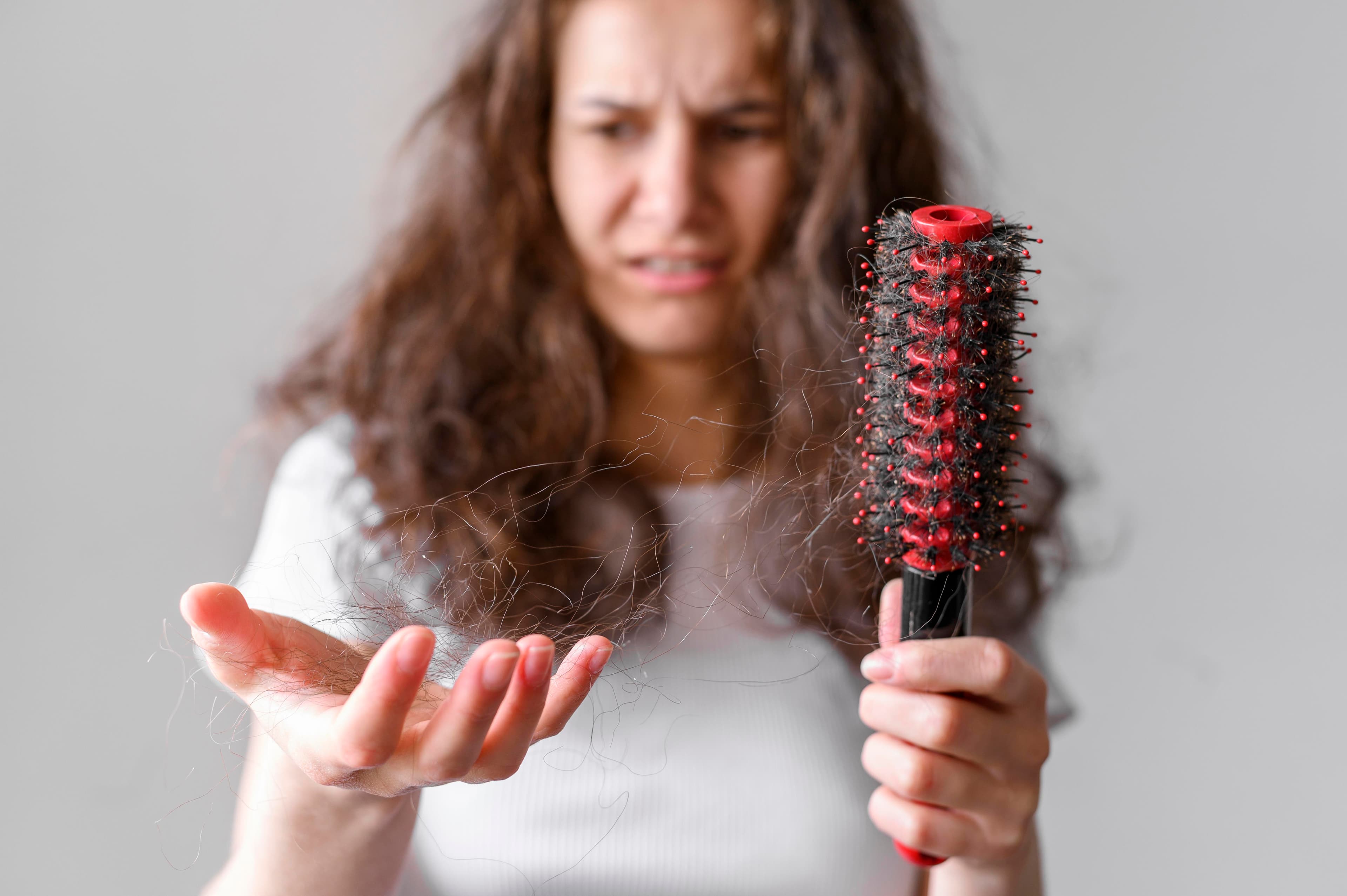
Hair health is about much more than shampoo. Modern research shows that stress, sleep, hormones, nutrition, and scalp condition all directly influence how thick, strong, and healthy your hair looks.
Why Is My Hair Thinning? The Secret Science of Hair Loss (And How to Fix It)
Finding more hair than usual in your shower drain or noticing your part line widening can trigger an immediate sense of panic. Your mind starts racing with questions: Is this permanent? Did I use the wrong shampoo? Is it stress? If you are currently staring into the mirror checking your hairline, know this: you are not alone, and it is highly likely that your hair follicles aren't dead they are just stuck.
Understanding the science behind hair loss is the first step to reversing it.
In mainstream beauty culture, we are bombarded with quick-fix topical oils, expensive serums, and miracle gummies. But your hair doesn't grow in a vacuum. True hair density, strength, and retention are dictated by a complex, hidden ecosystem beneath your skin.
To permanently stop shedding and reverse thinning, you have to understand the biological triggers that tell your hair follicles whether to grow or to drop. Pulling directly from clinical dermatological studies, let's unpack the exact science behind why your hair is thinning and the proven, data-backed steps to bring it back to life.
“Your hair follicles aren't dead they are just stuck. Understanding the biological triggers can bring them back to life.”
What Causes Hair Thinning? The 3 Phases of the Hair Growth Cycle
To understand why your hair is falling out, you first need to understand how it grows. At any given moment, every single hair follicle on your scalp is operating independently in one of three distinct lifecycle phases:
The Anagen Phase (The Growth Window): This is the active phase where the cells in the root of your hair divide rapidly, adding to the hair shaft. This phase typically lasts anywhere from two to seven years and determines the maximum length of your hair.
The Catagen Phase (The Transition Window): A short, two-to-three-week transitional stage where the hair stops growing and detaches itself from the local blood supply.
The Telogen Phase (The Resting and Shedding Window): This phase lasts for around three months. The follicle rests before eventually releasing the hair strand to make way for a brand-new growth cycle.
When you experience sudden or progressive hair thinning, your hair lifecycle has been disrupted. A physiological or environmental trigger forces a massive wave of active growing hairs (Anagen) to prematurely slam into the shedding phase (Telogen). When this happens concurrently across your scalp, it results in diffuse thinning, visible scalp exposure, and noticeable shedding.
Which Vitamin Deficiency Can Cause Hair Loss? The Essential Micronutrients Your Follicles Need
One of the absolute most common, yet easily reversible, drivers of non-scarring hair loss is a cellular fuel crisis. The cells inside your hair follicle matrix are among the fastest-dividing cells in the entire human body. Because their metabolic turnover rate is so incredibly high, they require a constant, uninterrupted stream of specific vitamins and minerals to synthesize keratin and build new hair strands.

Proper nutrition is essential for healthy hair growth and maintenance.
Clinical reviews published in Dermatology and Therapy have mapped out the exact micronutrients that act as modifiable risk factors for hair loss. If you are deficient in any of the following, your hair growth cycle will grind to a halt:
1. Iron and Ferritin (The Oxygen Transporters)
Your hair follicles require an immense amount of oxygen to maintain active cell division. Iron is the core component of hemoglobin, which transports oxygen to your scalp. When your iron stores (measured via blood tests as ferritin) drop too low, your body views hair growth as a luxury it cannot afford. It shunts iron away from your scalp to protect vital organs, forcing your hair into an extended resting state.
2. Vitamin D (The Follicle Awakener)
Vitamin D is actually a hormone, and it plays a foundational role in keratinocyte differentiation. More importantly, optimal Vitamin D levels are strictly required to initiate and "turn on" the Anagen (growth) phase of new hair follicles. A systemic deficiency keeps your follicles sleeping, preventing new hair from replacing what you naturally shed.
3. The B-Complex: Biotin and Folic Acid (The Cellular Dividers)
Folic acid (Vitamin B9) is directly responsible for healthy cell division and the regeneration of hair matrix cells. Concurrently, Biotin (Vitamin B7) serves as an essential coenzyme in metabolism, helping your body process the amino acids needed to construct robust, breakage-resistant hair shafts.
4. Zinc (The Structural Protector)
Zinc is a trace mineral crucial for hair tissue growth and repair. It helps keep the oil glands around your follicles working perfectly and ensures the structural integrity of the protein matrix that holds your hair together.
Get Your Complete Hair & Style Guide
Discover personalized haircare, grooming, and style recommendations tailored to your unique features. Upload a few photos and get science-backed guidance built around your face shape and hair type.
Get Started It's FreeTakes 3 minutes · No credit card required
How Does Scalp Health Affect Hair Growth? The Hidden Threat of Oxidative Stress
For decades, medical science treated hair conditions and scalp conditions as completely separate issues. However, pioneering clinical research reveals that your scalp acts as a literal incubator for the pre-emergent hair fiber. If the scalp environment is compromised, the structural quality of the hair is permanently damaged before it ever breaks through the surface of the skin.
The primary culprit behind scalp-driven hair thinning is oxidative stress. This occurs when an overabundance of free radicals (unstable molecules from air pollution, UV radiation, and heavy styling products) overwhelms your scalp's natural antioxidant defenses.
When oxidative stress runs rampant on the scalp, it triggers lipid peroxidation, the degradation of the natural protective oils on your skin. This leads to focal inflammation, which weakens the physical anchoring force of the hair fiber within its follicle. As a result, the hair is prematurely cast out, leading to early shedding and fine, brittle, or rough hair texture.
Furthermore, a common scalp fungus known as Malassezia thrives in oily, unwashed, or highly stressed scalp environments. As Malassezia feeds on your scalp's sebaceous lipids, it releases inflammatory free fatty acids. If left unchecked, this localized inflammation accelerates epidermal cell proliferation (leading to dandruff and seborrheic dermatitis) and directly signals your hair follicles to stop growing.
Can Hormones Cause Hair Loss? How Stress and Estrogen Alter Your Baseline
Your hair follicles are highly sensitive endocrine organs, meaning they possess their own receptors for a vast array of hormones. Shifts in your internal chemistry can profoundly alter how long your hair stays in the growth phase.
The Cortisol Spike (Stress-Induced Shedding)
When you go through a period of intense physical or psychological stress, your adrenal glands flood your system with cortisol. High systemic cortisol levels act as a direct biological brake on hair growth. It inhibits the production of key cellular elements (like hyaluronans and proteoglycans) that keep the hair follicle structurally sound. This shifts your hair into a temporary, synchronized shedding state called Telogen Effluvium, which typically manifests as massive hair fall two to three months after the stressful event occurs.
The Postpartum and Menopausal Shift (Estrogen and Progesterone)
Hormonal research demonstrates that female hormones like estrogen and progesterone are highly protective, life-extending signals for hair follicles. They prolong the Anagen phase, keeping your hair looking incredibly thick and voluminous. However, during major hormonal transitions such as the rapid drop in estrogen immediately following childbirth or the gradual decline during menopause this protective shield is lifted. Without estrogen keeping the follicles active, a large percentage of hair enters the catagen and telogen phases simultaneously, causing diffuse thinning and a wider part line.
How Can I Regrow My Thinning Hair? A Step-by-Step, Science-Backed Blueprint
Now that we know the precise biological triggers behind hair thinning, we can move past marketing hype and implement a targeted, clinical approach to get your hair growing back thicker and stronger.

A science-backed approach can help restore hair thickness and health.
Step 1: Maximize Follicular Nutrition
Before spending money on external treatments, fix the internal foundation. Request a comprehensive blood panel from your doctor to check your Ferritin, Vitamin D, Zinc, and B-vitamin levels. Aim not just for "normal" reference ranges, but for optimal ranges conducive to hair growth (for instance, a ferritin level above 50–70 ng/mL is often recommended by trichologists for active hair recovery). Incorporate lean proteins, leafy greens, and targeted clean supplementation to give your hair matrix cells the building blocks they need.
Step 2: Eliminate Scalp Inflammation and Oxidative Stress
Prioritize scalp hygiene to keep the Malassezia fungus and free radicals at bay. Look for high-quality, scientifically formulated shampoos containing active ingredients like Zinc Pyrithione, Ketoconazole, or Piroctone Olamine. These ingredients don't just clear away visible dandruff flakes; they actively suppress fungal-induced inflammation, neutralize oxidative damage, and improve the anchoring strength of your hair follicles.
Step 3: Enhance Scalp Blood Flow and Circulation
To get your follicles out of their resting state, you must deliver oxygen and nutrients directly to the root. Consider integrating Scalp Microneedling (using a dermaroller or dermastamp once a week) or incorporating a Topical Minoxidil protocol under the guidance of a dermatologist. These methods physically stimulate localized blood circulation, open up nutrient-rich pathways, and forcibly reset the follicle back into an active, healthy Anagen growth phase.
The Final Takeaway: Consistency Is Key
Hair growth is a slow, deeply patient biological process. Because a hair follicle requires roughly three months of rest before it can begin producing a new strand, you should expect to maintain any new hair recovery routine for at least 6 to 12 months before evaluating your visible results.
Stop stressing over the hair in the drain, focus on nurturing your internal health and scalp ecosystem, and give your body the exact environment it needs to unlock its natural, vibrant thickness.
“Hair growth requires patience. Maintain any new routine for at least 6 to 12 months before evaluating results.”
Becoolone Editorial
Scientific References
1. "The Role of Vitamins and Minerals in Hair Loss: A Review" Dermatology and Therapy
https://pmc.ncbi.nlm.nih.gov/articles/PMC6380979/
2. "Stress and the Hair Follicle: Exploring the Connections" PMC
https://pmc.ncbi.nlm.nih.gov/articles/PMC7367675/
3. "Hormonal Effects on Hair Follicles" PMC
https://pmc.ncbi.nlm.nih.gov/articles/PMC7432488/
4. "The Scalp Microbiome and Its Role in Hair Disorders" PMC
https://pmc.ncbi.nlm.nih.gov/articles/PMC7275370/
5. "Hair Follicle Aging and Hair Loss" PMC
https://pmc.ncbi.nlm.nih.gov/articles/PMC6369642/